
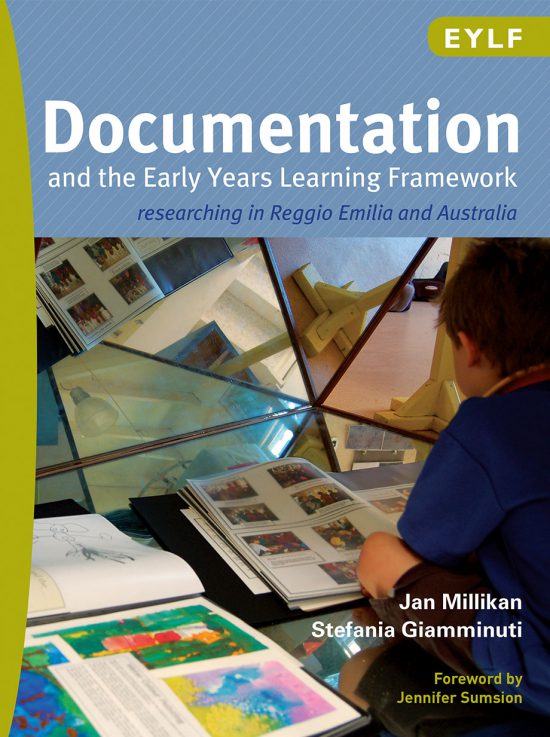
P/B • 245mm x 175mm • 336 Pages ISBN 9781876138387 ‘The ideas and concepts surrounding pedagogical documentation have been, for many, vague, slippery and hard to pin-down … This book teaches us to listen, speak, interpret, think, reflect as well as record the interactions between us, materials, representations and environments and space. Always, the aim is to enhance learning in a respectful way which honours and values what all the participants bring to the situation … By drilling-down into particular episodes of teaching and learning through each chapter, we see how the adults learn and teach and how the children teach and learn. This simultaneous meaning-making is laid bare through in-depth analyses of children’s actions, words and deliberations; seeing children and adults as active citizens in their shared learning spaces.’ Taken from the foreword of this book by: Iram Siraj-Blatchford, Professor of Education, Institute of Education, University of London Contents Foreword by Iram Siraj-Blatchford Acknowledgments About the authors Introduction Chapter One: Pedagogical conversations: Setting the scene Alma Fleet, Catherine Patterson and Janet Robertson Part 1: Opening the conversations Chapter Two: ‘As I grow up I learn more and more from other people’: Opening up spaces to re-imagine knowledge in a primary school through pedagogical documentation Clare Britt and Sophie Rudolph Chapter Three: The culturally-embedded mind: Personal reflections on pedagogical documentation Angela Chng and Doranna Wong Chapter Four: Get over yourself: The ethics of respect Louise Cave, Belinda Connerton, Toby Honig and Janet Robertson Response to Part 1: Jan Millikan and Jill MacLachlan Part 2: Locating the conversations Chapter Five: Learning to document: Student teachers speak Catherine Patterson Chapter Six: ‘Mine, thine and ours’: Exploring Thirdspace through pedagogical documentation Suallyn Mitchelmore Chapter Seven: Disrupting the separation of adult and child worlds: Teachers’ identity and the ongoing flow of agency Slavica Jovanovic and John Roder Chapter Eight: Experiencing active citizenry: The right to an equal vote Pamela Wallberg Response to Part 2: Margo Hobba and Miriam Giugni Part 3: Expanding the conversations Chapter Nine: Materials matter: A conversation on matters material Louisa Schwartz and Janet Robertson Chapter Ten: The semiotics of entering: Beauty, empathy and belonging in Reggio Emilia Stefania Giamminuti Chapter Eleven: Making a space for pedagogy: The story about Mia Mia — a work in progress Wendy Shepherd and Janet Robertson Response to Part 3: Christine Stevenson and Kirsty Liljegren Part 4: Disrupting the conversations Chapter Twelve: Only seeing colour? Identity, pedagogy and ways of knowing Anthony Semann, Denise Proud and Karen Martin Chapter Thirteen: Unpacking racialisation through pedagogical documentation: Exploring nomadic practices Veronica Pacini-Ketchabaw and Fikile Nxumalo Chapter Fourteen: Towards future conversations: Complicating surveillance and empowerment Alma Fleet, Catherine Patterson and Janet Robertson Response to Part 4: Laurie Kocher and Sandra Cheeseman Index