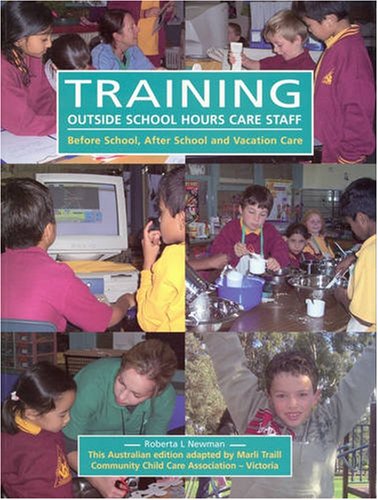
P/B • 210mm x 280mm • 96 Pages ISBN 9781876138233 Before School, After School and Vacation Care Training Outside School Hours Care Staff was created in response to requests from OSHC Coordinators. Training more and more new staff is a challenging task as the sector grows. In preparation for creating this handbook, the author Roberta Newman surveyed a sampling of OSHC Coordinators to identify what Coordinators want new staff to understand and keep in mind as they begin and continue their work. The topics explored in this handbook reflect what Coordinators said they want staff to know about: how to understand and respond to children’s needs, interests and concerns how to build positive relationships with children; how to plan for a successful first day; how to provide safe, effective supervision; how to develop and maintain effective service guidelines and limits; how to plan and implement activities children will enjoy; how to manage conflicts among children; and how to make families feel welcome, and more. Training Outside School Hours Care Staff is designed as a tool for school-age co-ordinators who often have limited resources and time to devote to staff training. With this in mind, each section of the handbook provides interactive questions and scenarios staff can work through independently. Even though staff can use this handbook on their own, it encourages them to share their answers to study questions and other ideas with a supervisor or a mentor as many of the study questions ask staff to think about how they could use the information in their own service. Otherwise, they may not succeed in using the tools in this handbook in ways which are best suited to your service. Contents Introduction: Tips for Coordinators on How to Use This Handbook Chapter 1: OSHC: One of the Most Important Jobs You’ll Ever Have What Is OSHC all about? A look at an emerging profession Changing times and the growing need Where we are now How the sector of OSHC is growing What will I gain from working in a school-age service? What do I have to give? Do I have ‘what it takes’ to work with school-age children? How can I be a positive role model for school-age children? What we’we learned about the sector of OSHC Chapter 2: Who are School-Age Children and What do They Need from Me? A look at components of OSHC and how they differ A look at characteristic traits of school-age children A look at individual differences among school-age children how you can help them What we’ve learned about school-age children Chapter 3: Having a Good Start on Your First Day at Work Learning all about your OSHC Learning about your job responsibilities Tips for building a positive relationship with children from the first moment Guiding children’s behaviour and supporting children in learning to guide their own behaviour What we’we learned about getting off to a good start on your first day Chapter 4: Some Common Do’s and Don’ts for Staff in OSHC Services Things to always keep in mind when working with school-age children Positioning while supervising Things to avoid doing when working with school-age children What we’ve learned about do’s and don’ts for OSHC staff Chapter 5: Developing and Implementing Service Guidelines Working with school-age children to set guidelines and limits Helping children take responsibility for their actions What we’re learned about developing and implementing service guidelines Chapter 6: Strategies for Planning Service Activities Children Will Enjoy Planning activities linked to developmental needs and interests Involving children to develop a child initiated program plan Making the most of your service environment Other tips for program planning Gap Fillers- no – prop games and activities to use on the spot! Tips for leading games andi involving children in group activities What we’ve learned about planning and leading service activities children will enjoy Chapter 7: Handling Problems and Conflicts among School-Age Children Setting a positive tone from the beginning Teaching children step-by-step problem solving strategies Learning to recognise the common causes of conflicts in OSHC Services Tips for diffusing and reducing conflicts when they emerge Becoming aware of your conflict management style Asking for help with difficult problems and conflicts What we’ve learned about handling problems and conflicts among school-age children Chapter 8: Connecting with Parents and Families in OSHC Ideas for reaching out to parents and families as partners with OSHC services What we’ve learned about connecting with parents and families in OSHC services Chapter 9: Wrapping Up: Keys to Success as an OSHC Member Using diverse roles as an OSHC staff member Tips for success during the first few months Appendix 1: Answer Guide Appendix II: Resource List Index


Limited Edition Cards – Collector Playing Cards
Cardistry Playing Cards – Limited Edition Playing Card Decks – Limited Edition Cards